Your pet’s internal body systems are complicated, much like they are for humans. Determining the cause of issues in those systems can be challenging, especially since our pets cannot tell us what they’re experiencing. But they may give us signs that indicate something isn’t quite right. When these clinical signs are present, your family veterinarian may refer you to a specialist that has undergone extensive internal medicine training for small animals.
How is a veterinary internist different from a primary care veterinarian?
Most primary care veterinarians complete undergraduate training and then four years of veterinary school. Internists do the same, but also go on to complete an internship, three-year internal medicine residency, and then pass rigorous board examinations in their specialized field.
That’s a minimum of four years additional training before they earn the designation of a specialist by the American College of Veterinary Internal Medicine (ACVIM), the certifying organization in the United States.
What do veterinary internists do?
Internists are highly trained to understand the complex interactions of all of your pet’s organs and bodily systems and how to treat the underlying causes of disease. They specialize in the assessment, diagnosis, and treatment of diseases of cats’ and dogs’ internal systems, such as liver, kidney, gastrointestinal tract, endocrine system, lungs and airways. To obtain an accurate diagnosis, specialized diagnostic testing is often required. Fortunately, we can perform most of these tests in-house leading to rapid answers. Ultrasound, blood chemistries, biopsies, endoscopy and more are available, giving the clearest picture of what is happening in your pet, so that the best course of treatment can be developed.
Veterinary internists are skilled at treating a wide range of diseases and conditions Common conditions that result in a referral to a board-certified internist from a pet’s primary care veterinarian include diabetes, blood disorders, infections, cancer, digestive tract issues, hormone/endocrine or immune disorders, diseases of the kidney, liver, gallbladder, lungs, and urinary or reproductive tracts.
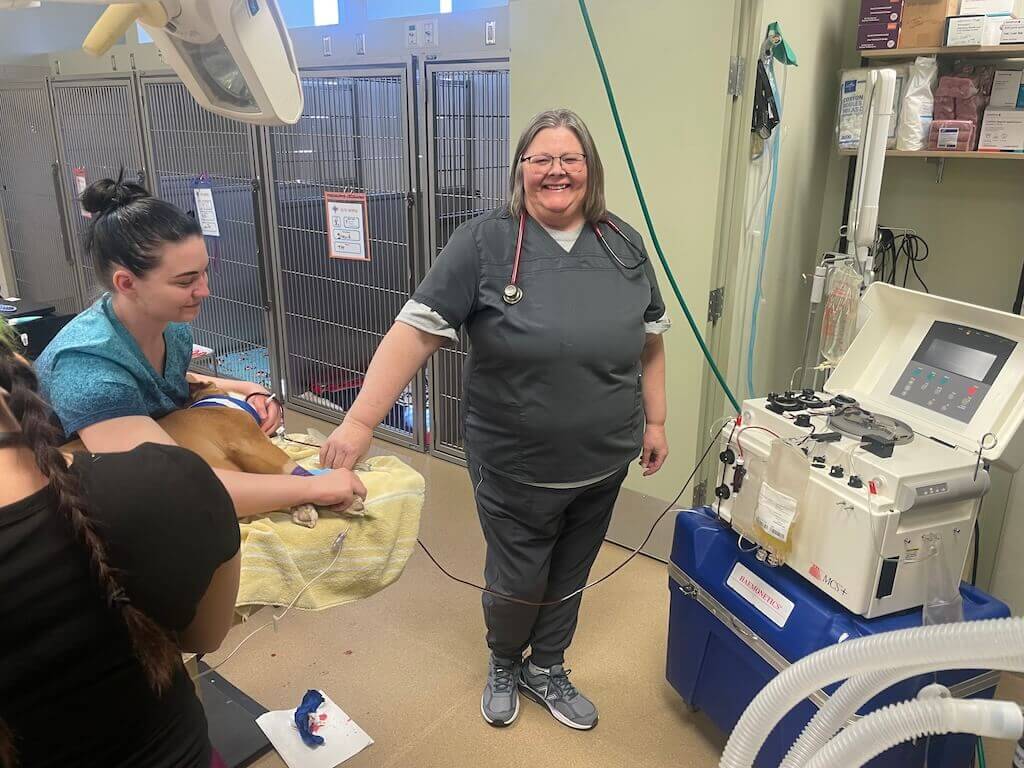
We are fortunate to have Dr. Anne Hale as our medical directory, helping pets with chronic, complex, or complicated conditions and illnesses. Dr. Hale studied small animal internal medicine at Michigan State University and then stayed on to participate in a NIH comparative transfusion medicine fellowship. Her special interests include chronic immune-mediated disease, bone marrow disease (including tickborne disease), and critical care medicine involving anemia/thrombocytopenia.